

Connect Now
Service & Support:
- Follow-up from a licensed broker within 24 hours
- Policy Review and Comparison
- Risk Assessment
- Help with certificates of insurance, policy changes and contract reviews
- Renewal planning well before your policy expires
Contractor Insurance in Ontario
At CommercialInsurance.ca, we connect Ontario contractors with licensed brokers who identify your real exposures, place coverage with the right markets, and support you when a claim happens. A professional in our network follows up within 24 hours, because construction timelines do not wait.
Get A Quote
How CommercialInsurance.ca works
We are not an insurer or a broker. We find you the right one.
Matched by industry
We connect you with a broker who works with businesses like yours, not a generic call centre.
Licensed Ontario brokers
Insurance brokers in Ontario are licensed by the Registered Insurance Brokers of Ontario (RIBO).
Fast follow up
Once we receive your information, a professional in our network will connect with you within 24 hours.
No cost to be matched
Our referral service is free for businesses. You deal directly with the broker for quotes and coverage.
Understanding Contractor Insurance
Definition and importance
Contractor insurance is not one single policy. It is usually a package of coverages that work together to protect your contracting business from common construction and trade-related losses. Most contractor insurance programs include some combination of commercial general liability, tools and equipment coverage, commercial auto, and workplace coverage considerations (such as WSIB in construction).
It matters because one uninsured claim can cost more than years of premiums. It also matters because many customers, general contractors, and project owners will not let you start work until you can provide proof of insurance.
Common types of contractor insurance
The most common types of insurance for contractors in Ontario include:
General Liability (CGL) for third party bodily injury and property damage claims
Tools and equipment insurance to repair or replace stolen or damaged tools and equipment
Commercial auto insurance for business-owned vehicles and job-related driving risk
Project-specific insurance such as builder’s risk and wrap-up liability for certain jobs
Errors and omissions (E&O) for contractors who have design, specification, or professional exposure (depends on your scope of work)
Why do contractors need insurance?
Protection against risks
Contractors face a mix of risks on every job:
A customer slips on a wet entryway you are working near
A mistake causes damage to a client’s property
A subcontractor’s work triggers a claim and you are named too
Tools are stolen from a vehicle or job site
A work truck is involved in an at-fault accident on the way to a site
The right contractor insurance program is about staying in business even after a bad day.


Legal requirements
In Ontario, “legal requirements” depends on what kind of contractor you are and what work you do.
WSIB construction rules: The Workplace Safety and Insurance Board (WSIB) has expanded compulsory coverage in the construction industry. WSIB states that people who own or run a business in construction, with or without employees, must have WSIB coverage and need to register (with some exceptions).
WSIB clearance certificates: On many construction relationships, clearance is a key requirement. WSIB’s operational policy describes when principals and contractors in construction must obtain a clearance certificate and the requirements for a clearance to be issued.
Contractors also face contract-based requirements that are not “laws” but are still mandatory if you want the job, such as minimum liability limits, adding a client as an additional insured, or providing certificates of insurance before work begins.
Building client trust
A certificate of insurance (COI) is one of the fastest ways to build trust with a customer or general contractor. It shows you have active coverage, which helps reassure clients they will not be stuck paying for damages if an accident happens.
For contractors, trust also equals speed. When a customer needs proof of insurance today, your broker needs to respond today.

Key types of insurance for contractors
Below are the coverages most Ontario contractors consider. Your best mix depends on trade, job size, contracts, and whether you run employees or subcontractors.
Liability insurance for contractors
Most people mean commercial general liability (CGL) when they say “contractor liability insurance.” CGL is designed to protect your business against third party claims for bodily injury or property damage arising from your operations.
In contractor terms, liability insurance can help when:
A client alleges your work caused damage to their property
Someone is injured at the job site and alleges negligence
A claim includes legal defence costs and settlement negotiations (subject to policy wording)
Contractors often choose limits based on what their contracts require. Many general contractors and commercial customers will specify minimum limits and may require additional insured wording.
Get Your FREE Quote
WSIB coverage for contractors
For contractors doing construction work in Ontario, WSIB is a critical topic. WSIB’s expanded compulsory coverage means many business owners and operators in construction need WSIB coverage and registration, even if they do not have employees (with specific exceptions).
This impacts:
Independent operators in construction
Sole proprietors
Partners
Executive officers of corporations in construction
If you work as a principal hiring subcontractors, understanding WSIB clearance requirements matters too, because clearances are used to confirm WSIB coverage status in construction contracting chains.
Get Your FREE Quote
Commercial auto insurance
If you use vehicles for business purposes, personal auto insurance often will not match the exposure. Commercial auto is commonly described as a key coverage for businesses using vehicles commercially, covering damage or loss of vehicles and liability for injuries or property damage caused by those vehicles.
Commercial auto becomes especially important when you have:
A pickup or van used daily for jobs
Multiple drivers
A fleet
Tools and materials in the vehicle (which may require separate tools or cargo coverage depending on the situation)

Equipment and tools insurance
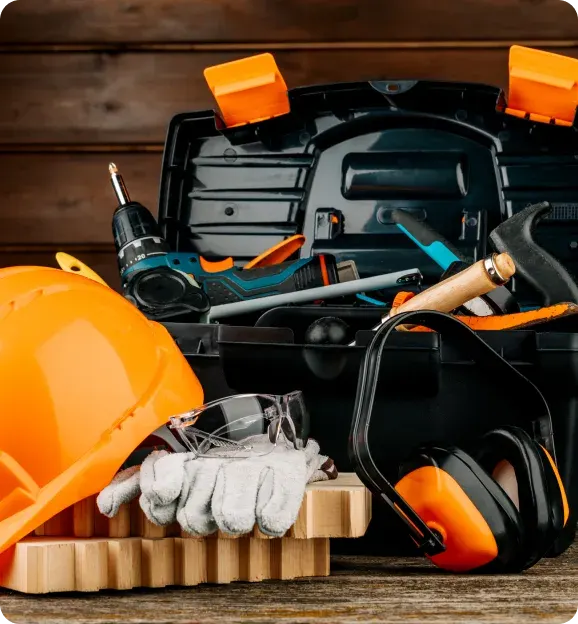
Your tools and equipment are often your livelihood. Tools and equipment coverage is commonly described as protecting the tools and equipment used for your work, including theft, damage, or loss at a job site or during transportation.
This type of insurance is especially valuable for trades where you carry high-value gear, or where theft risk is higher due to frequent site-to-site movement.
General liability insurance
General liability is the foundation of most contractor insurance programs. It is also the coverage clients expect first. Many contractors lose work opportunities simply because they cannot provide a valid COI showing general liability coverage.
To make your general liability coverage more job-ready, you may need:
Additional insured wording for certain clients
Contractual liability coverage appropriate to your contracts
Completed operations coverage aligned to your work type
Higher limits if you work on larger commercial projects

Choosing the right insurance coverage
Factors to consider
The right contractor insurance in Ontario is not just “buy a policy.” It is selecting coverage that matches your actual risk.
Key factors include:
Trade and scope of work (roofing, electrical, plumbing, framing, restoration, general contracting, etc.)
Job size and type (service calls vs large projects)
Whether you use subcontractors and how you transfer risk
Annual revenue, payroll, and claims history
Type of work
Different work creates different claim patterns. For example:
High-risk trades may face higher liability premiums and stricter underwriting
Contractors who advise on design or specs may need E&O
Contractors working on large projects may need project-specific coverage like wrap-up liability or builder’s risk depending on contract requirements
Business size and structure
Insurers typically consider your structure when pricing and underwriting:
Sole proprietor vs incorporated business
Employees vs subcontractor model
Whether you own vehicles or rent equipment
Whether you do one-off work or repeat projects
Premiums vary widely by trade and business profile. Sources discussing contractor insurance costs commonly point to factors like trade, business size, revenue, and claims history as major drivers.
Working with insurance brokers
Contractor insurance is full of small details that become big problems during a claim: exclusions, limits, additional insured wording, and project requirements.
A broker should help you:
Review contracts and match coverage to the agreement
Structure limits and deductibles that make sense
Place coverage with the right market for your trade
Provide certificates quickly when you need them
Support you through claims, not just at renewal
Common misconceptions about contractor insurance

“It’s only for big companies”
Even a one-person contractor can face a large liability claim. If you step onto a job site, your risk does not scale down just because your business is small. Contractor insurance is for any contractor doing work that could cause injury, property damage, or financial loss.
“It’s too expensive”
Cost depends on your trade, revenue, claims history, and coverage choices. Many discussions of contractor insurance costs highlight that premiums range widely, with smaller contractors paying much less than large general contractors on complex projects.
In many cases, the bigger risk is being underinsured or uninsured and having to pay legal defence and damages out of pocket.
“I’m already covered by my client’s policy”
Sometimes a project has wrap-up liability or other project insurance, but that does not automatically replace your own coverage. Project insurance often includes two main coverages, builder’s risk and wrap-up liability, and these are project-focused solutions.
Even when a project policy exists, your business may still need:
Your own general liability for off-project operations
Tools and equipment coverage
Commercial auto
WSIB compliance where applicable
The safest approach is to review the contract and the project policy wording before assuming you are covered.
Why customers choose CommercialInsurance.ca
Contractors come to CommercialInsurance.ca because we connect them with licensed brokers who do more than sell a policy.
 1
1We have the experience to understand contractor risk
We know the common claim scenarios by trade and the insurance gaps that show up in real construction disputes.
Get Started Now! 2
2We make sure the insurance actually covers you
A good broker does not just quote limits. They review the wording, exclusions, contract requirements, and endorsements so the coverage fits your work.
Get Started Now! 3
3We know the market and plan for your growth
As you take on larger projects, add vehicles, hire staff, or expand into new trades, we help you evolve coverage so you stay eligible for better jobs.
Get Started Now! 4
4We are responsive, follow-up within 24 hours
If you need a certificate of insurance, a contract review, or help after an incident, you should not wait days for a reply.
Get Started Now!
If you want contractor insurance in Ontario that is built around your trade and your contracts, CommercialInsurance.ca can help.
FAQs about contractor insurance in Ontario
What is contractor insurance?
Contractor insurance is a package of commercial coverages designed to protect contractors and tradespeople from common risks like third party injury or property damage claims, tool theft, commercial vehicle losses, and project-related exposures.
What insurance do contractors need in Ontario?
Most contractors start with commercial general liability, and many also need tools and equipment coverage and commercial auto. Contractors in construction may also need WSIB registration and coverage under expanded compulsory coverage rules, depending on their situation.
Is contractor insurance required by law in Ontario?
There is no single law that forces every contractor to buy general liability insurance, but many clients and contracts require it. For construction industry workplace coverage, WSIB expanded compulsory coverage applies to many businesses in construction, including some owners and operators, with certain exceptions.
How much is contractor insurance in Ontario?
Premiums vary widely. Cost depends on trade, annual revenue, payroll, claims history, coverage limits, and the type of work you do. It is common for pricing to range significantly between a small independent contractor and a general contractor managing larger projects.
What is a certificate of insurance (COI) and why do clients ask for it?
A certificate of insurance is proof that you have active insurance coverage. Clients often ask for a COI to confirm you carry liability coverage before you start work, because it helps protect them if an accident or damage occurs.
Do I still need my own insurance if a project has wrap-up coverage?
Often, yes. Wrap-up liability and builder’s risk are typically project-specific coverages, and they may not replace your business’s own general liability, tools coverage, auto insurance, or other needs. Always confirm what the project policy covers and what your contract requires.
What is a WSIB clearance certificate in construction and when does it matter?
WSIB’s operational policy outlines when principals and contractors in construction must obtain a clearance certificate and the requirements before it will be issued. In many construction contracting chains, clearances are used to confirm WSIB coverage status before work proceeds.
Protect your team too
Offer health, dental and life benefits your employees will value.
We also connect Ontario businesses with licensed benefits advisors, from two person teams to growing companies.
 5/5 rating on Google
The Commercial Insurance Difference: Feedback from those referred
Proactive Broker Relationship.
The most noticeable difference was the fact that I no longer felt that I was needed to manage the broker... the brokers came to me with proactive recommendations and knew when to push and shop the market and when not to. When the topic of business insurance comes up, I always refer fellow business owners.
Steve T
Security Blanket For My Business
I was always the type of customer that never believed in insurance and only really got it because I had to. Then I connected with a broker through Commercial Insurance.ca and they asked me questions no one else ever did and that's how I knew something was different. They took the time to understand and evaluate the risks. Well, I ended up getting some extra coverage (legal expense) and thank goodness I did. Something fairly innocent turned into something quite nasty and I didn't have to do too much... my coverage took care of it. Now I look at Insurance as a security blanket for my business.
Michael L
They had my back
No one likes buying insurance because it's a bit of a bet against yourself. You just hope that when the bad things happen that insurance will do what it said it would do in the first place. Their specialist stand behind the policy's that they bind. They never professed to get me the best price, but they did say they have my back, and have my back, they did.
Steph P